


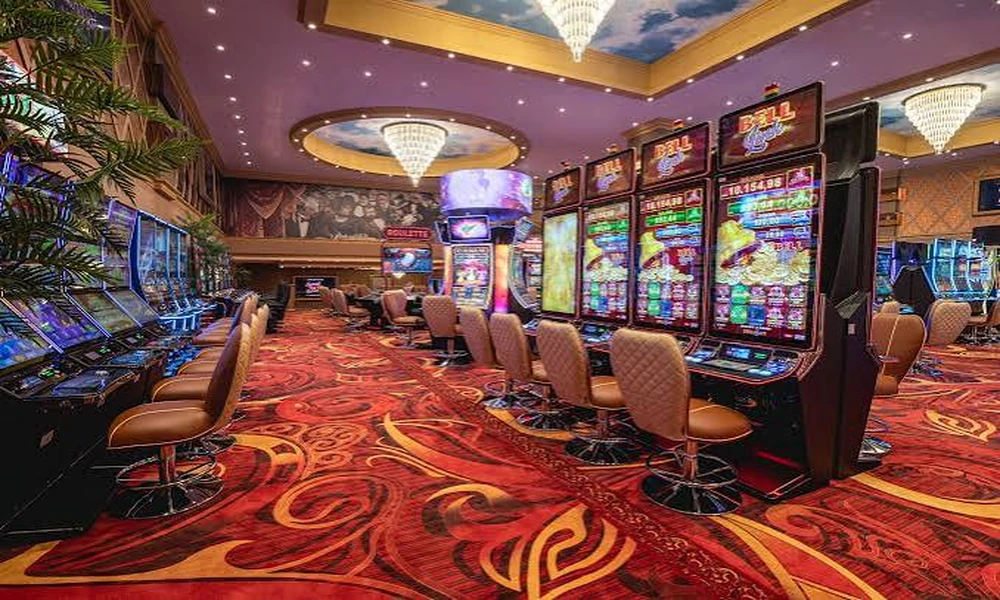
Plenty of platforms carry large game catalogues and still struggle to hold players past a first visit. The issue is rarely the number of titles. It comes down to whether the session itself gives someone a reason to come back the next day. Cool training mechanics do a lot of this work quietly, embedding feature tutorials into live gameplay rather than front-loading instructions before a session begins. Players learn by doing, which keeps early sessions moving rather than stalling at an explanation screen. That kind of frictionless entry tends to stick better than any onboarding flow a platform could design separately.
- Game format variety
A platform that runs deep in one category but thin across others creates a ceiling on how long most players stay engaged. Once a single format loses its pull, there is nowhere left to go without leaving entirely. Players get a natural next step when one category runs its course when there’s depth across slots, table games, and live dealer options. Changing formats keeps total session time growing without the player feeling repetitive.
- Reward structure design
Progress that disappears when a session closes is progress that never really existed from a player’s perspective. Loyalty points, milestones, and tiered completion mechanics that carry forward give each round a residual value beyond just what occurred. After finishing a session, a player who knows they’ve moved closer to something visible is more likely to open the next one.
- Live format engagement
Live dealer tables operate on a different kind of attention than digital games. The pacing is set externally, the presenter creates an environment rather than just a mechanic, and the social dimension shifts the experience from something a player controls entirely to something they participate in alongside others. That shift is harder to walk away from mid-session. Digital formats can be paused without consequence, but a live table in progress carries enough ambient pull to extend a session past the point where a purely digital game would have been closed.
- Interface and navigation
Friction in navigation does more damage to session length than most platforms account for. A player who cannot find their next game quickly will exit rather than search. The transition between titles needs to feel effortless, category filters need to surface relevant options without requiring multiple steps, and load times need to stay short enough that momentum never fully drops between games. When these elements work cleanly together, players stay within the environment longer simply because leaving requires more effort than continuing.
- Competitive session formats
Leaderboards and tournament structures introduce something that no individual game session can replicate on its own, which is a reason to return before a deadline. A player working toward a ranked position has an external clock running alongside their session, and that creates a different quality of engagement than open-ended play. Tournaments also pull players back between sessions to check standings, adjust strategy, or complete qualifying rounds before a window closes. That return behaviour is one of the more reliable session drivers a platform can build into its structure without changing any of its core game formats.
Platform design, game variety, reward continuity, and competitive structure each pull in a different direction, but they all point toward the same outcome. Platforms that treat session return as something to be engineered across every layer of the experience, rather than assumed from the game catalogue alone, tend to hold attention in ways that single-feature approaches never quite manage.